Understanding how a modular home comes together helps homeowners feel confident in the building process and the quality of the finished home. While modular homes are constructed differently than traditional site-built homes, they follow the same building codes and use many of the same materials—often with greater consistency and efficiency.
At Green Valley Homes, our consultants guide families through every step of the modular home journey, from design to delivery. By partnering with trusted manufacturers and vendors, we ensure each home is built with durable materials, precise craftsmanship, and long-term comfort in mind.
If you’ve ever wondered how modular homes are built—from framing and wiring to final assembly—this guide walks you through the process step by step. You can also watch the embedded video on this page to see the construction process in action.
Building a Modular Home
Step 1: Factory Construction in a Controlled Environment
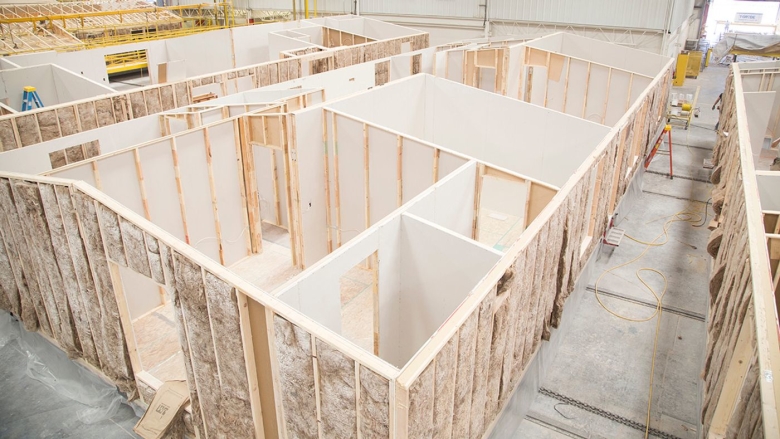
The modular home construction process begins inside a climate-controlled manufacturing facility. This is one of the most important differences between modular and site-built homes.
Because construction takes place indoors, materials are protected from rain, snow, extreme temperatures, and moisture. This controlled environment helps prevent warping, mold, and weather-related delays, allowing builders to maintain consistent quality and complete each phase efficiently.
Each modular home is built in sections, often referred to as “modules,” which are later transported to the home site for final assembly.
Step 2: Framing the Structure
Once construction begins, builders frame the home using traditional residential construction methods. Exterior walls are framed with standard-sized lumber and typically placed on 16-inch centers, just like a site-built home. This spacing provides strength, durability, and flexibility for future modifications or renovations.
Structural headers are installed above doors and windows to properly distribute weight and enhance long-term stability. Floors and ceilings are engineered to meet or exceed local building codes, ensuring the home can withstand transportation and final placement on the foundation.
At this stage, the basic shape and layout of the home take form, defining the spaces your family will eventually live in.
Step 3: Electrical, Plumbing, and Mechanical Systems
After framing, builders install the home’s internal systems. Electrical wiring, plumbing lines, and HVAC components are carefully planned and installed according to residential code requirements.
To enhance safety, electrical wiring is routed through wall studs and protected with steel plates where needed. This helps prevent accidental damage during finishing work and long after the home is occupied.
Because the work is done in a factory setting, inspections can be performed at multiple stages, ensuring accuracy and consistency throughout the process.
Step 4: Insulation and Energy Efficiency
Insulation is added to walls, floors, and ceilings to improve comfort and energy efficiency. Factory construction allows builders to install insulation evenly and precisely, reducing gaps that can lead to drafts or heat loss.
Many modular homes are designed with energy efficiency in mind, helping homeowners enjoy comfortable indoor temperatures and potentially lower utility costs year-round.
Step 5: Interior and Exterior Finishes
Once the core systems are in place, builders move on to finishes. Drywall, flooring, cabinetry, countertops, doors, trim, and fixtures are installed inside the home. On the exterior, siding, windows, and roofing materials are applied.
Because these finishes are installed before the home ever reaches the site, they are protected from weather exposure and constructed under consistent conditions. This often results in cleaner finishes and fewer delays.
Step 6: Transportation to the Home Site
After each module is completed and inspected, it is carefully wrapped and prepared for transport. The modules are then delivered to the home site using specialized carriers.
Meanwhile, the foundation is prepared on-site. Foundations can vary depending on the homeowner’s needs and local requirements, including basements, crawl spaces, or slab foundations.
Step 7: On-Site Assembly and Set
Once the modules arrive, a crane lifts them into place on the foundation. This process typically happens quickly—often within a single day—depending on the size and complexity of the home.
The modules are secured together, and the structure becomes a single, cohesive home. Builders then complete the final connections, including plumbing, electrical, HVAC tie-ins, and finishing touches such as exterior seams, interior trim, and final inspections.
A Home Built for Comfort, Safety, and Longevity
Building a modular home is more than assembling walls and floors—it’s about creating a safe, comfortable space where families can grow and thrive. From factory construction to final assembly, each step is carefully planned to deliver quality, efficiency, and peace of mind.
By understanding how a modular home comes together, homeowners can appreciate the craftsmanship behind the process and feel confident in choosing modular construction as a smart, durable housing option.
If you’d like to learn more, be sure to watch the video embedded on this page to see the modular home construction process firsthand, or contact our team to discuss your future home.